Why Your Play-to-Earn Rewards Keep Losing Value Before You Can Spend Them
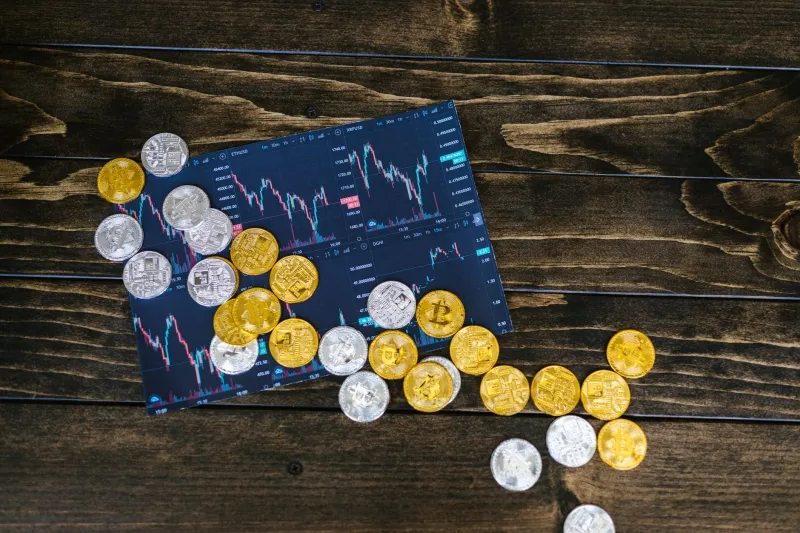
You've been there. You put in the hours, you learned the mechanics, you stacked up a solid pile of in-game tokens — and then you checked the price. Down 40%. Down 60%. Down 80%. The timing feels almost personal, like the market knew exactly when you were about to sell.
Spoiler: sometimes, it kind of did.
This is one of the most frustrating realities of the Web3 gaming world right now, and it's happening to players across the US and beyond on a daily basis. The technical term is tokenomics — the economic design behind a game's native currency — and when it's poorly built (or deliberately rigged), it can turn your hard-earned rewards into digital confetti faster than you can hit the withdrawal button.
Let's break down what's actually going on, and more importantly, how you can protect yourself.
The Inflation Trap Nobody Warns You About
Here's a fundamental problem with most play-to-earn games: they're constantly printing money. Every time a player completes a quest, wins a battle, or hits a daily milestone, new tokens get minted and dropped into circulation. That sounds fine in theory, but in practice it means the total supply of a game's currency is almost always growing faster than actual demand for it.
Think about it like this. If a game has 100,000 active players and every single one of them is earning tokens every day, that's an enormous flood of new supply hitting the market constantly. Unless there are equally strong reasons for people to hold or spend those tokens within the ecosystem, the price has basically nowhere to go but down.
This is called inflationary tokenomics, and it's the silent killer of play-to-earn profits. The game feels rewarding in the short term — you're earning something! — but the economics are quietly working against you every single session.
Early Investors vs. Everyday Players: A Rigged Game?
Here's where things get a little uncomfortable. A lot of blockchain games are structured — whether intentionally or not — to benefit the people who got in first at the expense of everyone who joined later.
Venture capital firms, early-stage investors, and founding team members typically receive large allocations of a game's token supply before the general public ever gets access. When a game launches and regular players start earning those same tokens through gameplay, the early holders already have millions of them sitting in wallets, waiting for the right moment to sell.
The moment regular player activity drives token prices up? That's often the moment early backers start unloading their holdings. The price spikes, casual players get excited and start grinding harder, and then the rug gets pulled as large sell orders flood the market.
This isn't always a coordinated scheme — sometimes it's just the natural result of bad vesting schedules and misaligned incentives. But the effect on everyday players is the same either way: you're often buying into a system where the biggest rewards were already claimed before you even made your account.
What Good Tokenomics Actually Looks Like
Not every blockchain game is set up this way. Some projects have done serious work to build reward systems that can actually hold value over time. Here's what to look for before you invest your time — and potentially your money — into a Web3 game.
Token sinks that actually work. A healthy game economy needs ways to remove tokens from circulation, not just add them. Look for games where in-game upgrades, crafting, NFT minting, or marketplace fees require players to burn or spend tokens. If there's no meaningful drain on supply, inflation wins.
Transparent vesting schedules. Any legit project should publicly disclose when early investors and team members can sell their token allocations. If that information is buried, vague, or missing entirely, that's a red flag. You want to know when the big unlock events are before you're holding the bag.
Dual-token models done right. Some of the more sustainable games use a two-token system — one for in-game rewards (which can inflate freely) and one for governance or premium transactions (which is kept scarcer). When this is executed well, it protects the core value token from getting wrecked by daily reward emissions. When it's done poorly, it just delays the inevitable. Research how each token in a dual-token system actually functions.
Real utility beyond speculation. Ask yourself: does this token have a reason to exist outside of being traded on an exchange? Can you use it to buy things with genuine scarcity? Does it power decisions about the game's future? Tokens with actual utility tend to hold value better than ones that exist purely as rewards to be sold.
Practical Ways to Play Smarter
Even if you're already deep into a game with questionable tokenomics, there are ways to reduce your exposure.
First, don't let rewards sit idle. If a game's token has been on a steady downward trend and there's no clear catalyst for a reversal, holding isn't a strategy — it's hope. Convert rewards regularly rather than waiting for a price recovery that may never come.
Second, pay attention to unlock calendars. Sites like Token Unlocks track when major vesting events are scheduled across crypto projects, including gaming tokens. A massive investor unlock coming up in 30 days is a pretty strong signal to think carefully about your timing.
Third, diversify your gaming portfolio. If you're spending serious hours in the play-to-earn space, don't put all your effort into a single game's economy. Spreading your time across two or three projects with different token structures gives you a buffer if one crashes.
Finally, treat in-game rewards like what they are: speculative assets. The psychological trick that gets a lot of players is thinking of earned tokens as "free money." They're not. They cost you time, and time has value. Apply the same skepticism to in-game currencies that you'd apply to any other crypto investment.
The Bottom Line
Play-to-earn gaming has real potential — the idea of owning your in-game assets and getting compensated for your time is genuinely compelling. But the current landscape is littered with projects that either didn't think hard enough about sustainable economics or actively designed their systems to extract value from regular players.
The good news is that this is a solvable problem, and some teams are actually solving it. The key is doing your homework before you grind, not after. Read the whitepaper. Check the token distribution. Look for those sinks and vesting schedules. Ask the uncomfortable questions in the project's Discord.
Because at the end of the day, the best play-to-earn strategy starts before you ever hit start.